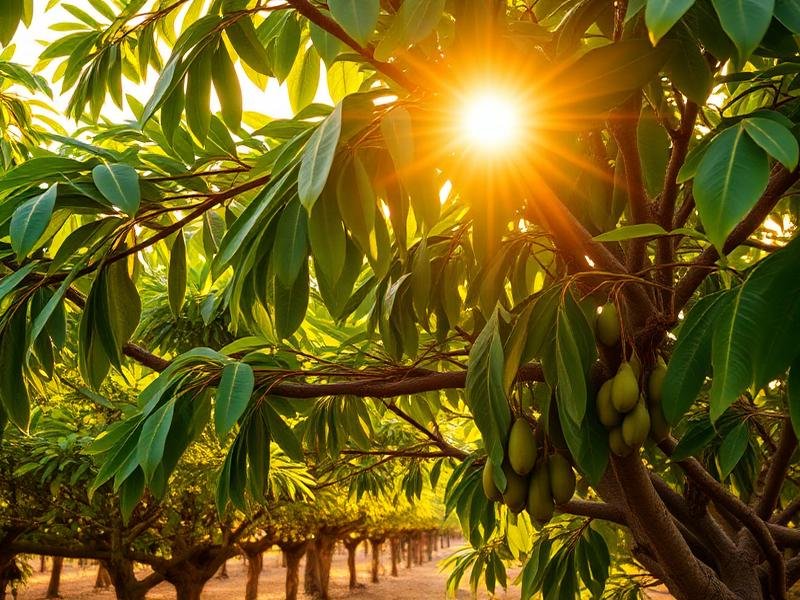
In the fight against climate change, cashew trees are emerging as unlikely heroes. These hardy tropical trees don't just produce delicious nuts — they actively combat environmental degradation in some of the world's most vulnerable regions.
Carbon Sequestration
A mature cashew tree can sequester approximately 500 kg of CO₂ per year. With over 6 million hectares of cashew plantations worldwide, that represents a significant carbon sink. Unlike many crops that require annual replanting, cashew trees are perennial — they continue absorbing carbon for 30–40 years.
Erosion Prevention
Cashew trees have extensive root systems that bind soil together, preventing erosion in tropical and semi-arid regions. In West Africa, where desertification threatens millions of hectares of farmland, cashew plantations act as natural barriers against soil loss.
Studies in Benin and Burkina Faso have shown that cashew orchards reduce soil erosion by up to 80% compared to bare land, while also improving soil fertility through leaf litter decomposition.
Biodiversity Support
Cashew plantations, particularly those managed using agroforestry principles, support rich biodiversity:
- Pollinators — cashew flowers attract bees, butterflies, and other pollinators essential for surrounding crops
- Bird species — the tree canopy provides habitat for dozens of bird species
- Soil microorganisms — the leaf litter creates a rich environment for beneficial soil bacteria and fungi
- Intercropping — young cashew plantations allow farmers to grow vegetables, legumes, and other crops between trees
Water Conservation
Cashew trees are remarkably drought-resistant, requiring only 600–1000mm of rainfall per year. Their deep taproots access groundwater that surface-level crops cannot reach, and their canopy shades the soil below, reducing water evaporation by up to 40%.
The Future of Sustainable Cashew Farming
Progressive farming cooperatives are implementing practices that amplify these environmental benefits:
- Organic certification that eliminates harmful pesticides
- Agroforestry systems that combine cashew trees with other crops and timber species
- Solar-powered processing facilities that reduce the carbon footprint of production
- Water harvesting systems that collect and store rainwater for dry season use
By choosing sustainably sourced cashews, consumers directly support farming practices that fight climate change while providing livelihoods for millions of people in developing countries.