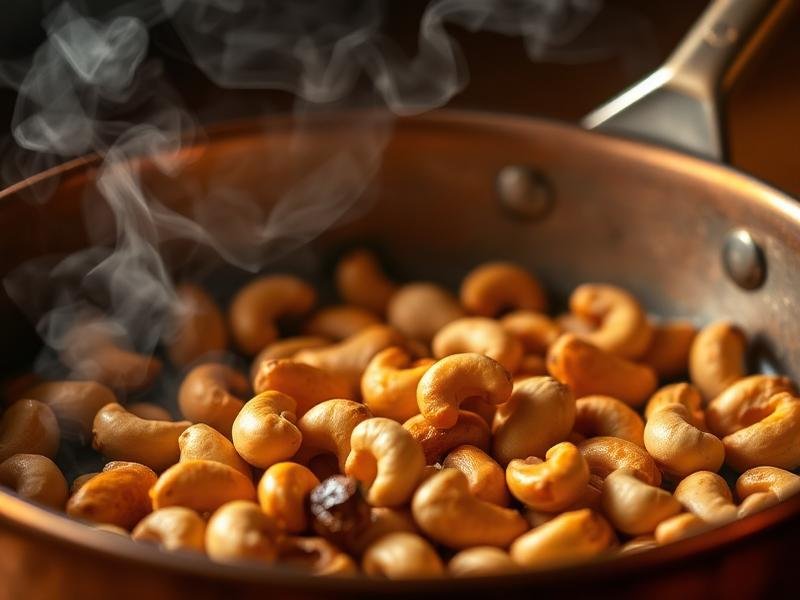
Roasting cashews is both an art and a science. The temperature at which you roast determines the flavor profile, texture, and nutritional value of the final product. Understanding this relationship is key to achieving the perfect roast every single time.
The Science Behind the Roast
When cashews are exposed to heat, a complex series of chemical reactions begins. The Maillard reaction — the same process that browns bread and sears steak — transforms simple sugars and amino acids into hundreds of new flavor compounds. This is what gives roasted cashews their characteristic nutty, caramelized taste.
At 120°C (250°F), the cashews begin to dry out slowly. This is the "low and slow" approach, ideal for preserving the delicate, buttery flavor of premium raw cashews. The result is a light golden color with a subtle sweetness.
The Sweet Spot: 150°C to 165°C
Most professional roasters agree that the sweet spot lies between 150°C and 165°C (300°F–330°F). At this range, you get the perfect balance of crunch, color, and flavor development without any bitterness.
The key is timing. At 150°C, cashews need about 15–20 minutes to reach optimal roast. At 165°C, that window shrinks to 10–12 minutes. The difference of even 2–3 minutes can mean the difference between perfection and over-roasting.
High Heat Roasting: 180°C and Above
Roasting above 180°C (356°F) is risky but can yield bold, deeply flavored results when done correctly. The sugars caramelize rapidly, creating a darker color and more intense flavor. However, this method requires constant attention — cashews can go from golden to burnt in under a minute at these temperatures.
Tips for the Perfect Home Roast
- Always preheat your oven to ensure even heat distribution
- Spread cashews in a single layer on a parchment-lined baking sheet
- Toss halfway through for even browning
- Remove from the baking sheet immediately after roasting — residual heat continues cooking
- Season while warm for better adhesion of salt and spices
Whether you prefer a light, medium, or dark roast, understanding the role of temperature gives you complete control over the outcome. Experiment with different temperatures and times to find your personal perfect roast.